
March is a wonderful time to refresh your home education rhythm with seasonal learning. As winter fades and the first signs of spring begin to appear, there are so many natural opportunities for curiosity, creativity and discovery. From nature study and seasonal science to cultural celebrations and creative projects, March offers plenty of inspiration for home educating families.
The beauty of seasonal home education is that it doesn’t need to be rushed. Many home education ideas for March can easily stretch across the whole spring season. Instead of trying to fit everything into one month, you might choose a few ideas that spark interest and allow them to unfold gradually throughout March, April and even May.
For me personally, March almost feels like my new year. After the darker winter months, I start to feel refreshed and renewed. The longer daylight and the first hints of warmth shift something internally. Every year I have the same realisation: I’m not miserable after all — I just forgot how much I need light and warmth!
That change in the season brings new energy into our home education too.
Nature Study and Outdoor Learning
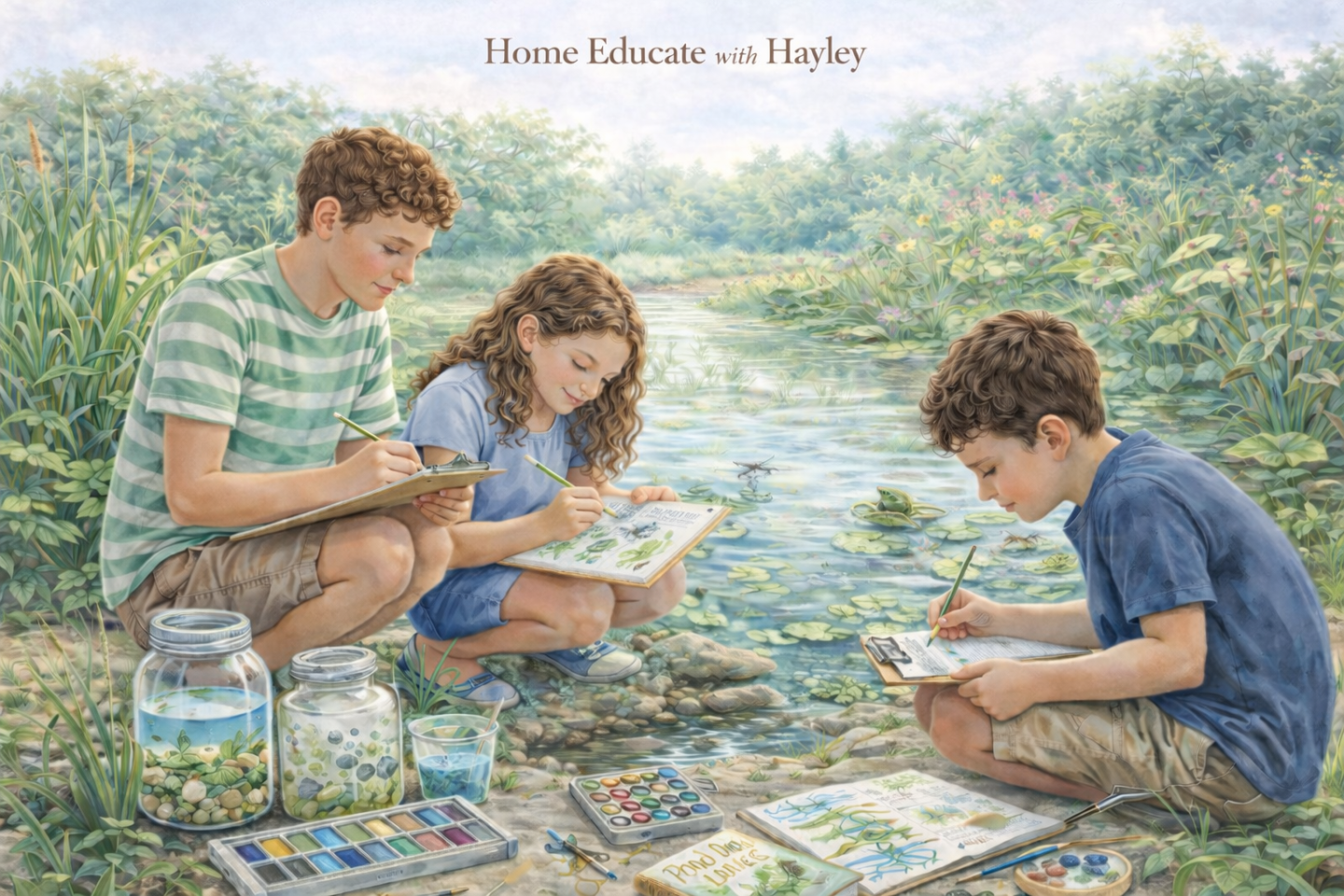
Spring is the perfect time to take learning outside. One of the simplest and most meaningful educational Spring activities is simply noticing the changes happening in nature. As the weather softens, children begin to see buds appearing on trees, early flowers pushing through the soil and birds returning to build nests.
A walk can quickly become a learning experience when children begin to look for signs of spring. Many families enjoy bringing along a nature journal so children can sketch what they see, record wildlife sightings or simply note seasonal changes week by week.
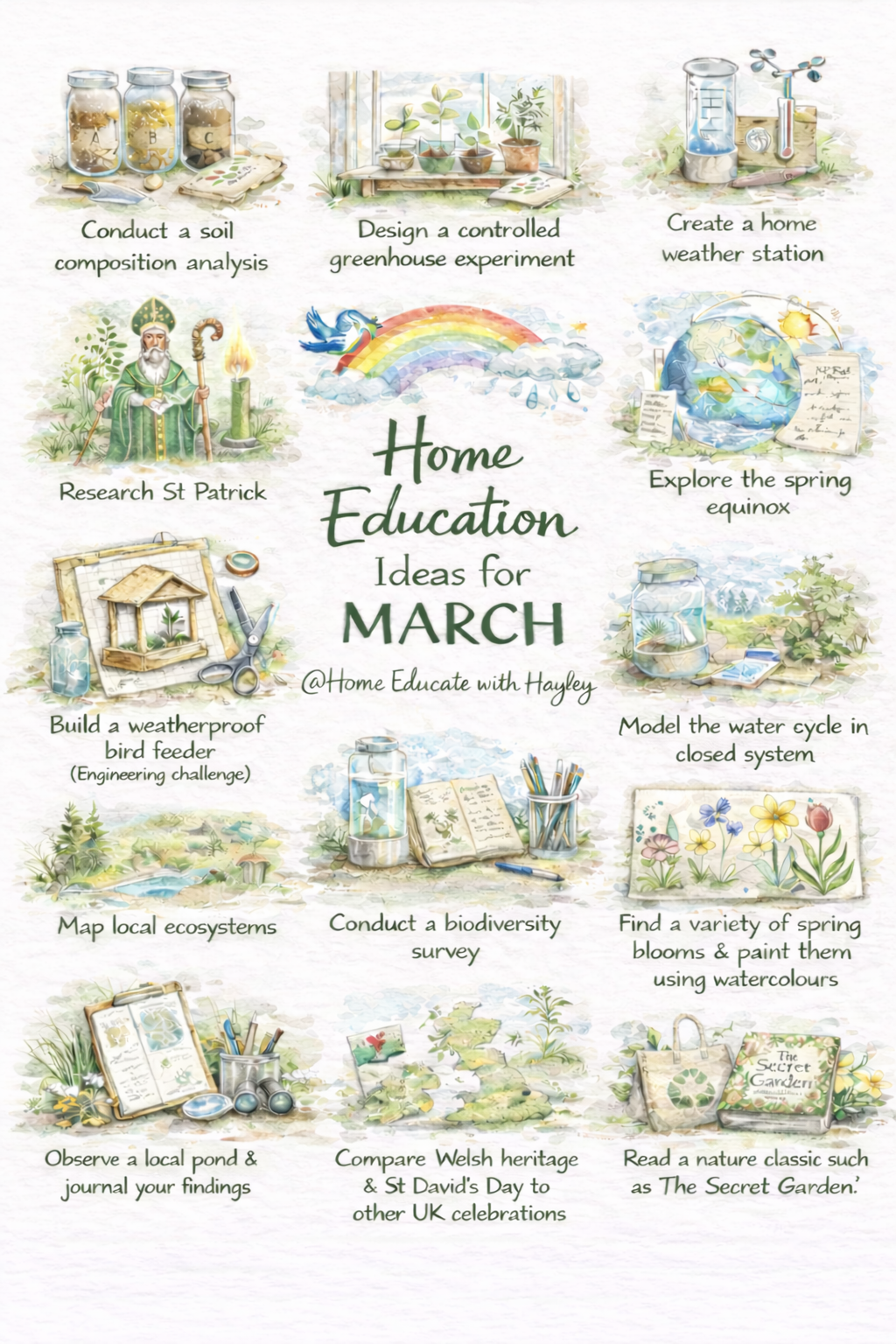
Local environments can also become wonderful places for gentle scientific exploration. Visiting a nearby park, woodland or pond invites children to observe ecosystems, identify plants and animals and begin to understand how different living things interact with their environment. I highly advise choosing somewhere close to home that you can re visit time and time again throughout the year. It’s a great way for children to really notice the changes in a single environment.
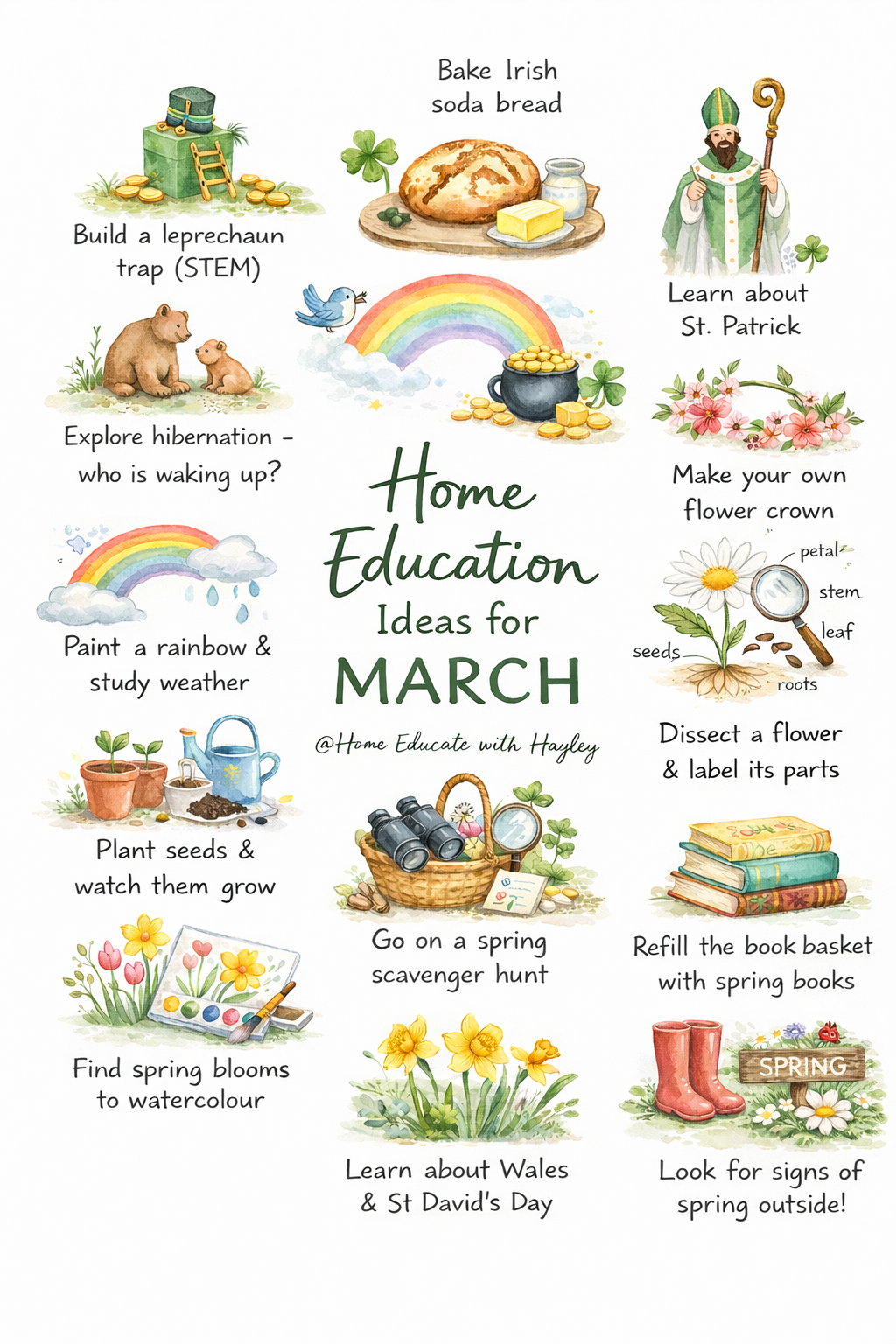
March also provides opportunities to explore seasonal science in simple ways. Planting seeds, observing the weather, learning about rainbows or talking about the spring equinox can all emerge naturally from the changes children are seeing around them.
These moments of observation often spark the most meaningful learning because they come from genuine curiosity.
Celebrating Seasonal Traditions
March also includes several cultural celebrations that can enrich your home education.
In the UK, St David’s Day at the beginning of the month offers a chance to explore Welsh history and heritage. Children might learn about the life of St David, discover traditional symbols such as the leek and the daffodil or explore Welsh culture and traditions.
Later in the month, St Patrick’s Day provides an opportunity to learn about Irish history and folklore. Families might enjoy researching the story of St Patrick, baking Irish soda bread or creating fun design challenges like building a leprechaun trap.
These small cultural moments help children see that learning connects to real traditions, places and people.
FOR OLDER CHILDREN: DEPTH, CONNECTION & INVESTIGATION
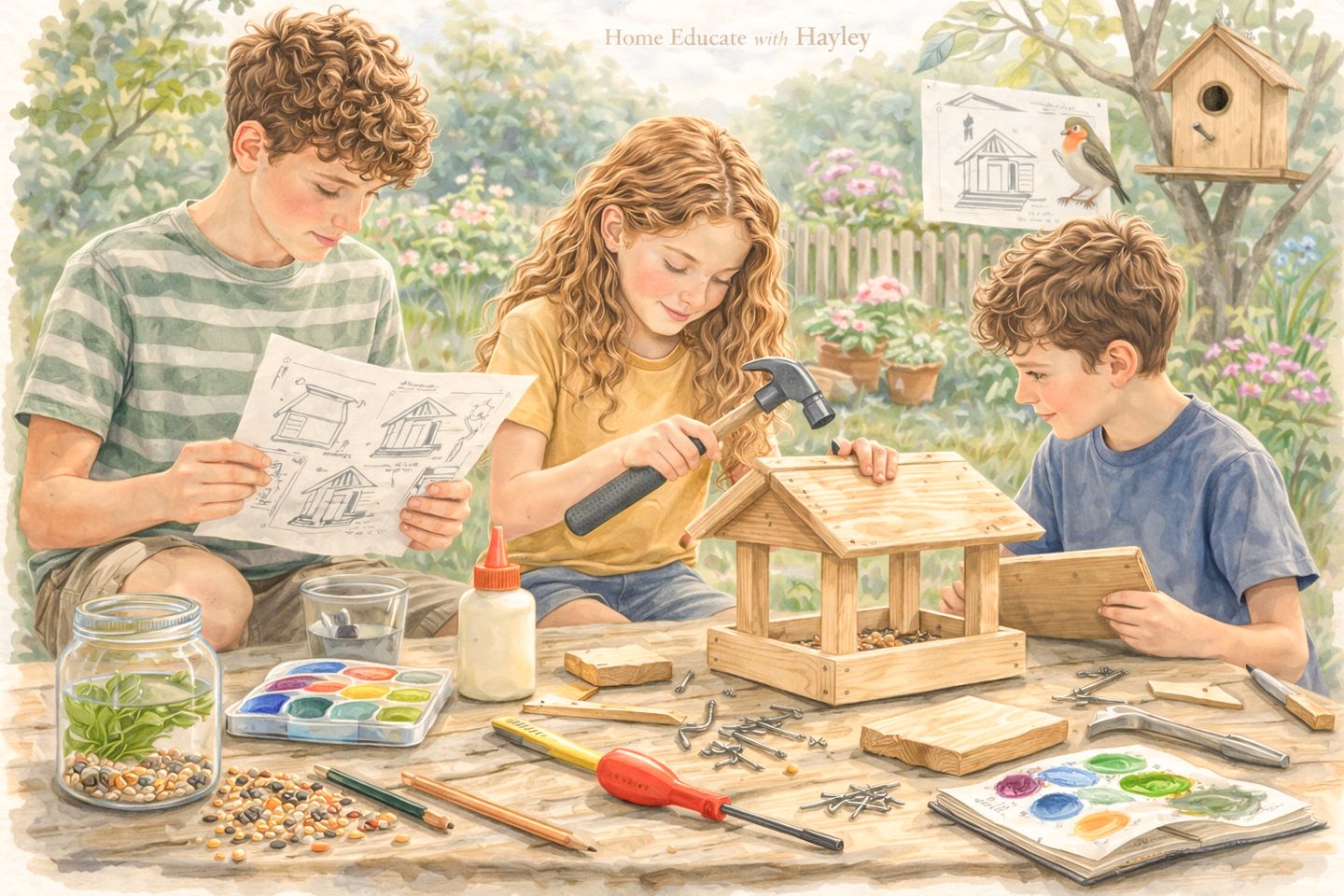
With older children, March feels like an opportunity to go deeper.
It’s a month that lends itself beautifully to:
- Careful data collection and observation
Scientific investigations and longer-term experiments - Environmental awareness and ecosystems
- Cultural studies and heritage comparisons
- Engineering-style design challenges
- Rich literature connected to nature and renewal
Older children often enjoy tracking weather patterns, observing plant growth over time or investigating local ecosystems more closely. They may begin to ask bigger questions about environmental change, biodiversity or the science behind seasonal shifts.
March provides a natural starting point for these deeper explorations.
FOR YOUNGER CHILDREN: WONDER, PLAY & DISCOVERY
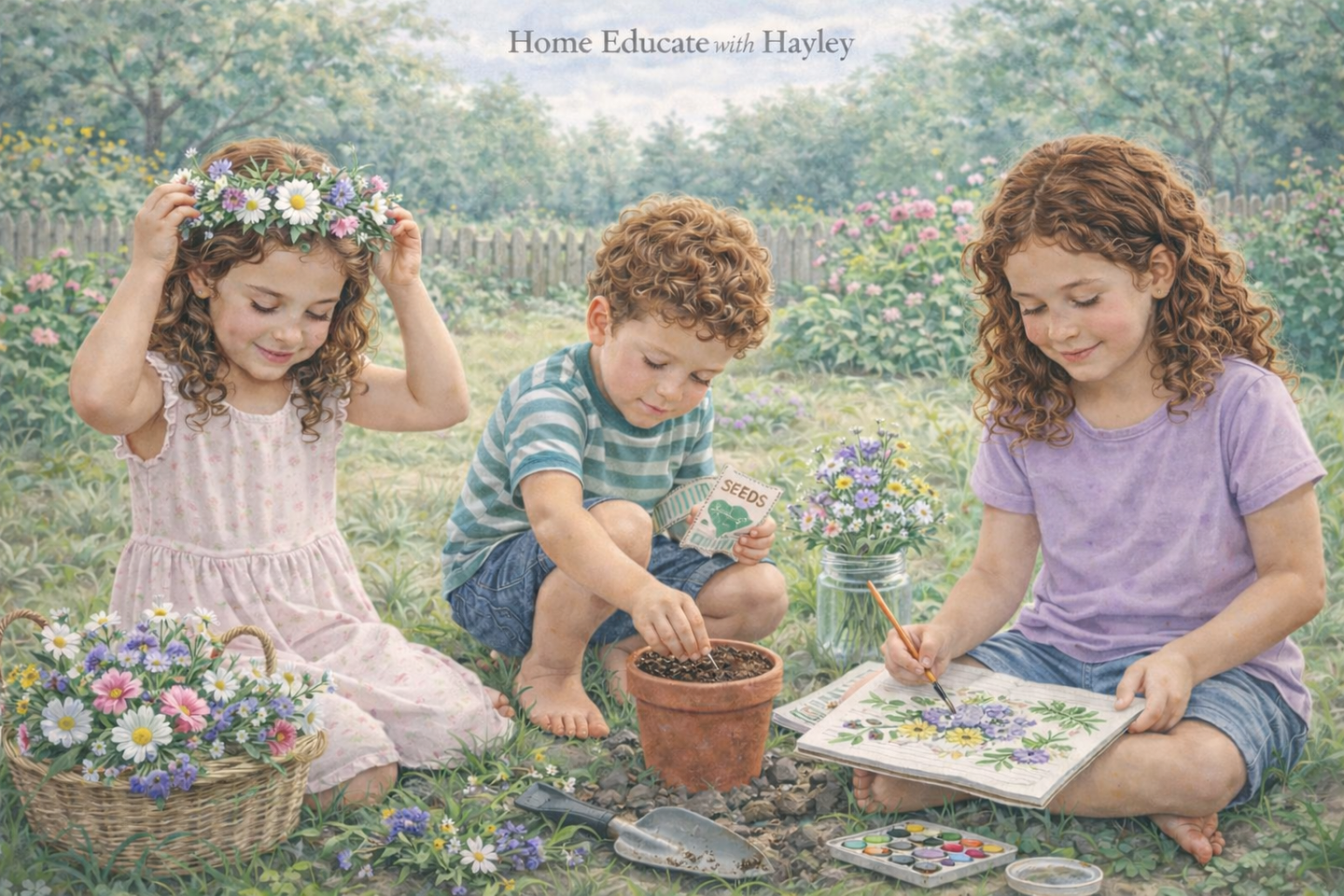
With younger children, March is pure delight.
It’s about noticing:
- The first blossom
- Warmer air on your cheeks
- Rainbows after showers
- Birds building nests
- Seeds beginning to sprout
Learning at this stage doesn’t need to feel formal. It can be playful, sensory and hands-on. Seasonal crafts, baking, simple science observations, nature walks and scavenger hunts are more than enough.
There’s something special about letting younger children experience spring through their senses; painting rainbows, planting seeds, exploring puddles or examining flowers up close. These experiences lay deep foundations for future scientific understanding without needing heavy explanation.
Our Nature Rhythm
We use a nature based curriculum all year round in our home, but if I’m honest, we lean into it most deeply during spring and autumn. Those two seasons feel alive with change, and that change creates natural momentum for learning.
If you’re looking for something gentle but rich to guide your nature studies, this is the one we use and love:
It provides structure without feeling rigid and encourages children to observe, record and connect with the natural world in meaningful ways.
If you’d like me to write a full review of how we use it in our home, what works well, how we adapt it across ages and how it fits into our wider rhythm — let me know in the comments.
Let Spring Learning Unfold Naturally
Perhaps the most important thing to remember is that home education doesn’t need too feel intense or overly structured. We generally are most structured in the colder months and naturally that falls away when the sun comes out and we choose adventure over textbooks.
Learning during spring often works best when it grows naturally from everyday life. A simple walk might turn into a nature study lesson. A gardening project might lead to questions about plant biology. A seasonal celebration might spark an interest in history or culture.
Rather than trying to cover every possible activity, choose a few ideas that resonate with your family and allow them to develop over time.
If any of the March ideas I’ve shared resonate with you, I would genuinely love to see what you create.
You can share using the hashtag HEWHmarch, add a comment below this blog or tag me on any of my social media channels. Seeing how other families bring these ideas to life is always such an encouragement.
March doesn’t demand intensity. It invites attentiveness.
It reminds us that growth often begins unseen — beneath soil, beneath the surface, in small daily habits. And that is true of learning too.

 English