The Children’s Wellbeing and Schools Bill is now nearing the end of its journey through Parliament. Over the past months – years actually, many home educating families, organisations, and campaigners have raised concerns, submitted evidence, fought for our rights to educational freedom and tried to explain how home education actually works in practice.
Despite that, the home education sections of the bill have now largely been finalised. Barring something major, (war or a general election) the legislation is likely to pass and become law.
For many of us this is a difficult moment. Not because home educators oppose safeguarding or support for children — quite the opposite. I’ve personally never met a home educator who doesn’t care deeply about children’s wellbeing and understand the importance of protecting vulnerable young people.
The concern is that this bill changes something far more fundamental: the relationship between us and the state when it comes to education.
For generations in England, the law has been clear. Parents hold the primary duty to ensure their child receives a suitable education. Families have had the freedom to choose how that education happens, including educating their children at home.
This bill shifts that balance.
A Mandatory Register of Children Not in School
One of the central parts of the legislation is the creation of a mandatory register of children who are not attending school. Local authorities will be responsible for maintaining this register, and parents will be required to provide information about their child and their educational arrangements.
On the surface this may sound administrative. But in practice it represents a significant change.
Parents will need to provide details about the child, themselves, and information about educational provision taking place outside the home. At this stage we don’t know if that only includes other providers over a certain amount of hours, does it just include tutors or any class leader that provides a provision like scouts or dance, or if forest school leaders for example will have to provide Information to the LAs about our children. The legislation also allows local authorities to request updates to this information.
The register will include details of both parents. For some families this raises serious questions about privacy and safety. For example, in situations where a parent has fled domestic abuse, families will understandably want reassurance that personal information cannot be accessed or shared in ways that could place them at risk.
Another concern is that once a child is added to the register, the local authority has a short period of time to consider the environment in which the child lives. Within 15 days of registration, the local authority can request to see the child in the home environment to assess whether the setting is suitable.
At this stage, it is not yet clear what criteria will be used to decide what a “suitable” environment looks like. That level of detail has not yet been published and is likely to be addressed in future guidance, or potentially left up to individual local authorities to decide.
It is important to say clearly that none of this has come into force yet. Families who are currently home educating do not need to contact their local authority or register themselves at this time. The existing legal framework for home education is still in place until the legislation is formally passed and implemented.
A Shift in Who Decides
Another significant change in the bill is the language around the “best interests” of the child.
Historically the legal question has been relatively straightforward:
Is the child receiving a suitable education?
Under the new system, local authorities will have greater scope to decide whether home education itself is in the child’s best interests.
This may sound subtle, but it represents a major shift. It moves the decision making power away from parents and places it increasingly in the hands of local authorities.
Many home educating families are concerned about this change because experiences with local authorities vary widely across the country. Some councils work constructively with families and respect parents and the law around home education. Others have a long history of misunderstanding and overstepping their powers; I’ve personally experienced both.
The fear for many families is that this legislation gives those overstepping authorities even more influence over decisions that have traditionally belonged to parents.
Consent to Remove a Child from School
The bill introduces situations where parents will need permission from their local authority before removing their child from school to home educate.
This will apply if a child attends a special school or if there has been recent involvement with social services – and that involvement could be for anything, we are not talking about just those children who are at risk of neglect and or abuse etc by the parents. It could also include those children where ironically social services have been involved due to an incident or lack of safeguarding within schools, and of course adopted children.
During the decision process, the child would remain on the school roll. If the local authority refuses permission, the child may have to stay in school. There is as yet no guidance to say how long this decision process could take. Therefore a child could be left in limbo unhappy and sometimes unsafe in school until a complete stranger decides if they think the child can be educated by their parent.
Again, this represents a departure from the long-standing position that parents have the right to choose where their child is educated.
Safeguarding Concerns
The government has framed many of these changes as safeguarding measures. The aim, they say, is to ensure that children educated outside school do not fall through gaps in the system.
Safeguarding is something everyone agrees matters. But most of us in the home education community question whether the measures in the bill are the most effective way to achieve it.
A register, increased monitoring, and expanded local authority powers may create more oversight — but they may not necessarily identify the children who most need help. At the same time, families who are already providing a safe and suitable education will find ourselves subject to increased scrutiny. The truth is there are already legislations in place that are supposed to protect children, and yet children still get let down by a system that is overstretched and understaffed.
There are also concerns about how data will be stored, who will have access to it, and how it will be shared between agencies.
What Happens Next
Although the home education section of the bill has now effectively been finalised, the story does not end here.
Once the legislation passes, the government will publish updated Elective Home Education guidance explaining how the new system should operate.
There will likely be a consultation on this guidance, and that consultation will matter. While the core law may be set, the guidance will influence how those powers are used in practice.
For many home educating families, this will be the next important opportunity to speak up and share their experiences.
A Changing Landscape for Home Education
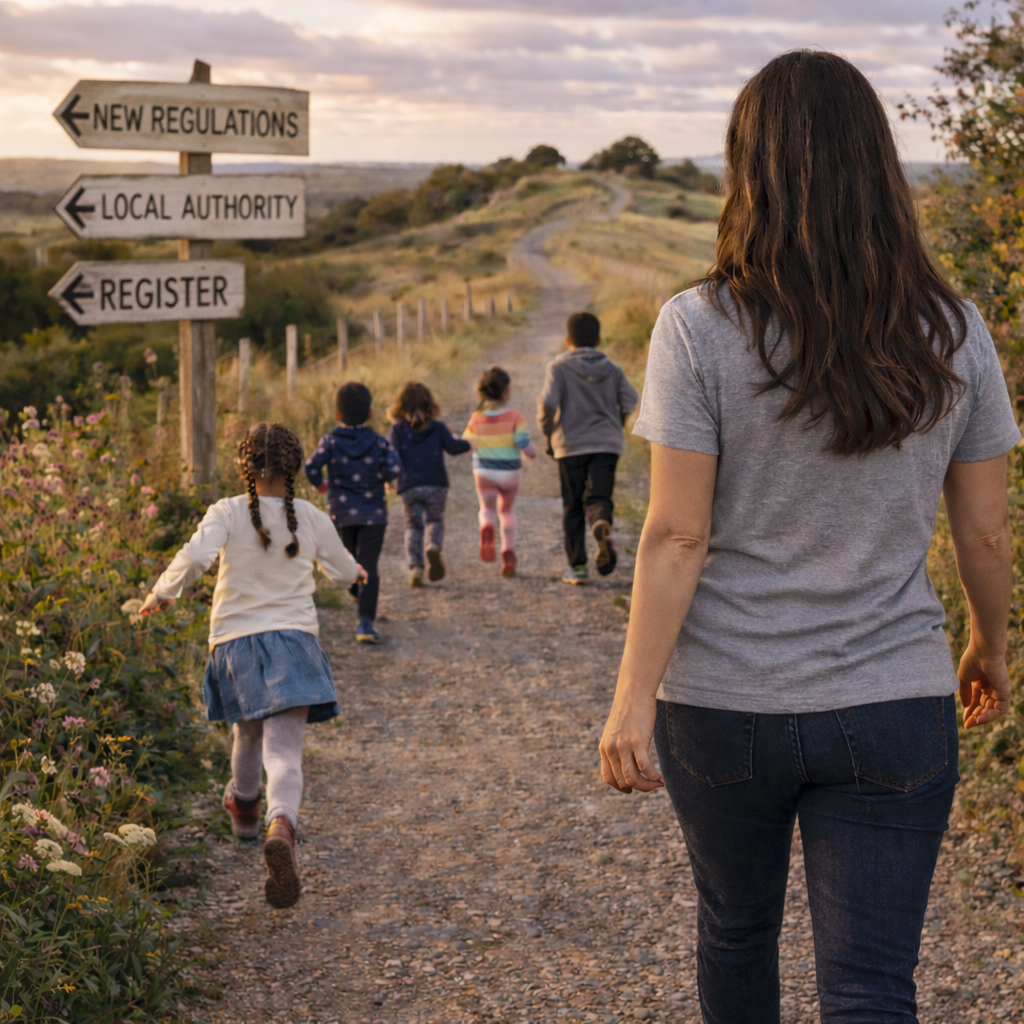
Home education in England is about to enter a very different legal landscape.
Many families feel disappointed that our voices have not been heard during the parliamentary process. Others are concerned about how these changes may affect the freedom that has allowed home education to flourish in such diverse and creative ways.
It is possible that the day-to-day reality will depend heavily on how individual local authorities interpret the law and guidance.
For now, the most important thing families can do is stay informed, understand their rights, and continue to advocate for home education to be recognised as a valid and positive educational choice.
For many families this moment feels heavy. Not because home educators have something to hide, but because something important feels like it is shifting. Home education in England has always been built on a simple principle — that parents know their children best and carry the primary responsibility for their education. When legislation begins to move that responsibility further toward the state, it changes more than just the legal framework. It changes the balance of trust between families and government.
At the same time, the reality of home education remains unchanged. Across the country thousands of families are raising curious, capable, thoughtful young people outside of the school system. Home education works because it allows children to learn in ways that truly suit them, guided by the people who know and care for them most.
Whatever the legal landscape becomes, that truth will not disappear. Home educating families have always been resilient, and the community has always found ways to support one another and advocate for the freedom to educate differently.

If you found this article helpful, please consider sharing it so that more families understand what is happening and what the proposed changes may mean. Staying informed and supporting one another will be more important than ever as the next stage of this legislation unfolds.
How to stay informed
Staying informed about new legislation and when the children’s wellbeing and schools bill comes in to play is of great importance. Below are some helpful places where you can do that.
Education Otherwise.
Doing Education Differently
Educational Freedom
Stop the children’s wellbeing and schools bill (Facebook group)

 English