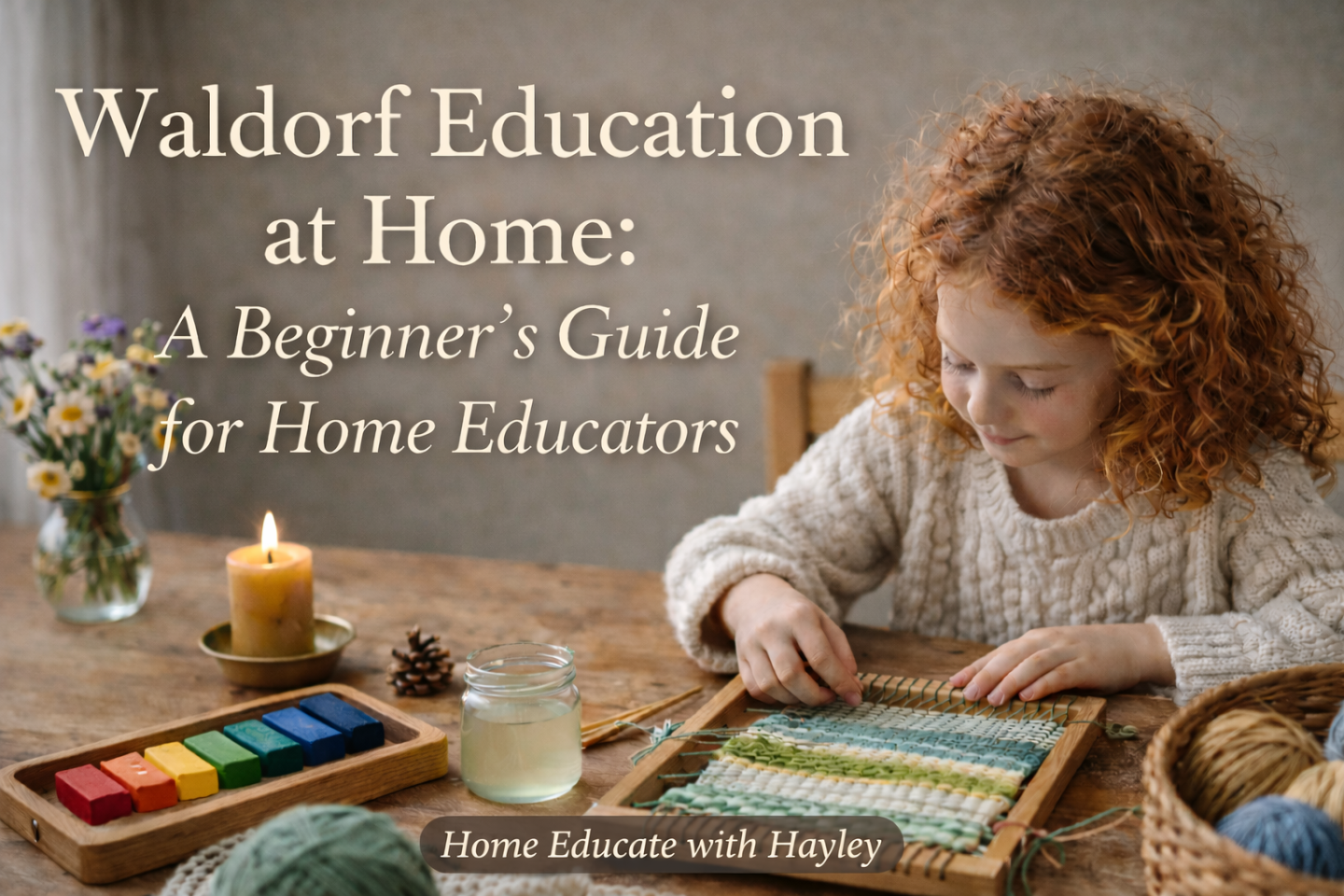
If you’ve recently come across Waldorf education and found yourself quietly drawn to it, you’re not alone. So many of us stumble across it while searching for a more meaningful way to approach home education—and something about it just feels… right.
What is Waldorf Education?
Waldorf education is an approach to learning that focuses on the whole child—head, heart, and hands. It was developed in the early 20th century by Rudolf Steiner, an Austrian philosopher who believed education should nurture not just academic ability, but creativity, imagination, and emotional development too.
The first Waldorf school opened in 1919 in Germany for the children of factory workers, with the aim of creating an education that was more humane, balanced, and connected to real life. Since then, the approach has spread around the world and has been adapted by many home educators who are drawn to its slower pace and emphasis on meaningful learning.
At its core, Waldorf education is about meeting children where they are developmentally, allowing them to learn through stories, creativity, movement, and real-life experiences—rather than rushing them into formal academics too early.
Personal Experience with Waldorf
My first taste of Waldorf was when my eldest two children were preschool age. We had a local Steiner preschool and although they didn’t attend, every Friday morning the preschool opened out to all children as a playgroup. I loved how gentle the environment was, mainly wooden and natural material toys, lots of open ended activities and each morning the children would bake bread to share with lunch. Many older children who were home educated also attended with their younger siblings on Friday mornings and that was one of my first experiences of getting to be around home educated children. They were always so articulate, independent and willing to help and teach one another; their behaviour really stood out.
When I first started looking into different ways to home educate I immediately looked into how I could incorporate Waldorf education. I had always wanted my children to attend the pre school but the waiting list was years long.
I remember thinking it felt like stepping into a different pace of life. Slower, Softer and more intentional. Less about ticking boxes, and more about how our children actually experience learning.
Whilst as a family our home education style isn’t strictly Waldorf I’ve definitely incorporated many aspects and traditions from the approach into both my children’s education, their play and daily lives.
Waldorf Rhythm: Creating a Gentle Flow to Your Day
One of the first things that stands out in Waldorf education is rhythm. Not a strict timetable, but a gentle, predictable flow that shapes your day.
Instead of constantly wondering what comes next, days begin to feel anchored. Mornings might start with a story, a poem, or a quiet moment together before moving into your main lesson. Then comes time outdoors, followed by a slower afternoon.
This kind of Waldorf rhythm doesn’t just support your children, it supports you too. It removes that constant mental load of decision making and replaces it with something calmer and more sustainable.
What Are Main Lesson Blocks in Waldorf Education?
In a traditional approach to education, children move quickly between subjects each day. In Waldorf education, it’s something quite different.
Main lesson blocks mean focusing on one subject for a few weeks at a time. This could be anything from nature and seasonal changes to history, maths, or science.
At first, it can feel like you’re not covering enough, but what actually happens is depth. Children begin to build a real connection with what they’re learning. They remember more, they notice more and they care more.
In a home education setting, this can feel especially freeing. You’re no longer rushing and ticking off curriculum days you’re exploring.
Creating Instead of Consuming: Main Lesson Books
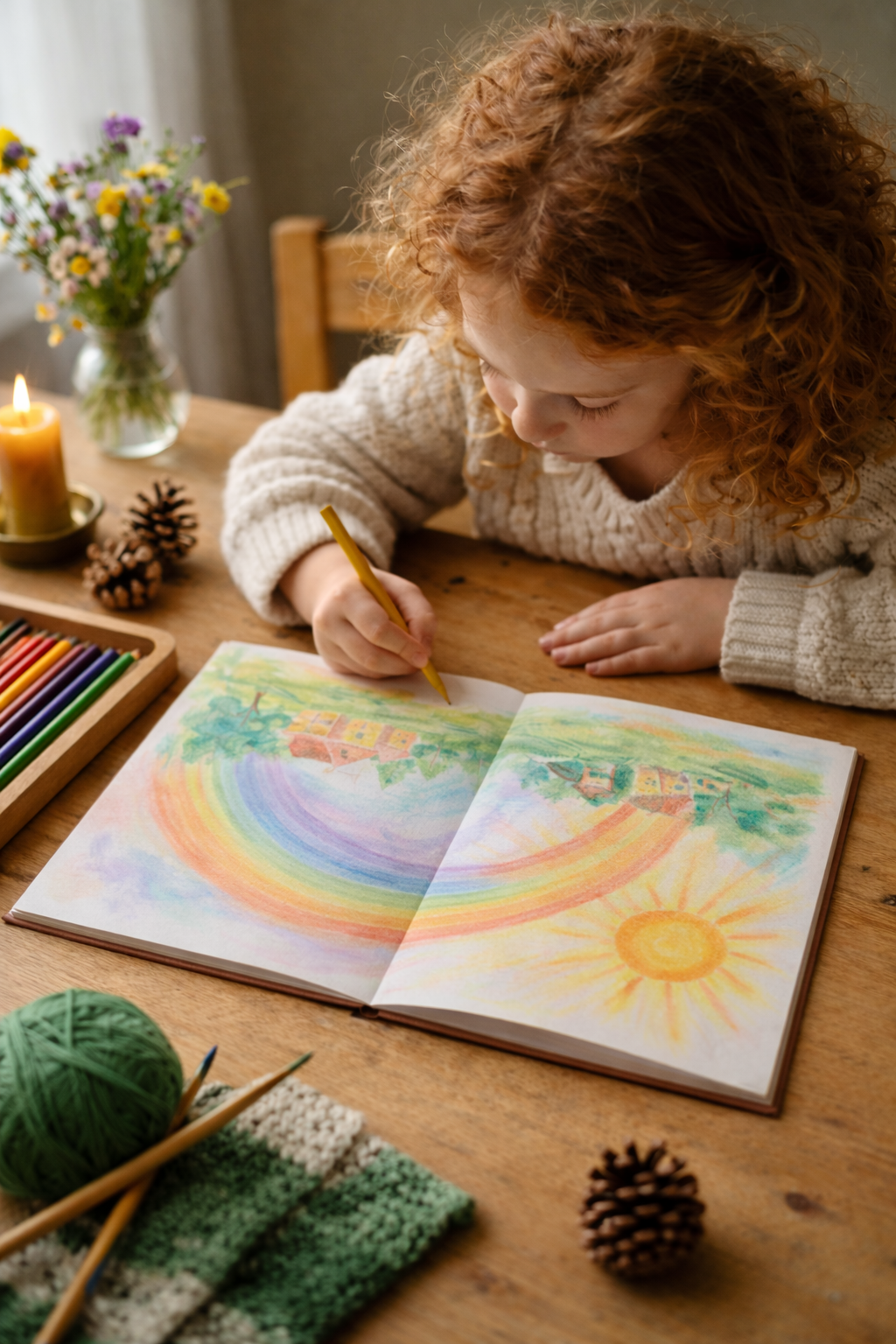
One of the most recognisable parts of Waldorf education is the use of Main Lesson Books.
Instead of worksheets or textbooks, your child creates their own book as they learn. After hearing a story or exploring a topic, they draw, write, and record their understanding in their own way.
There’s something so powerful about handing a child a blank page instead of a pre-filled one.
These books become deeply personal. Over time, they turn into beautiful records of learning—full of your child’s thoughts, creativity, and voice. Not just evidence of education, but something they genuinely treasure.
Art in Waldorf Education: Learning Through Creativity
Art is not an “extra” in Waldorf education—it is part of the learning itself.
Painting, drawing, and modelling are woven into everyday lessons. A story might be followed by a painting to capture its feeling. A concept might be explored through drawing rather than explanation alone.
This approach creates a very different atmosphere in your home. Things feel calmer, more thoughtful, less rushed.
And for children who don’t naturally connect with formal learning, art often becomes the bridge that helps everything else fall into place.
Why Handicrafts Are So Important in Waldorf Education
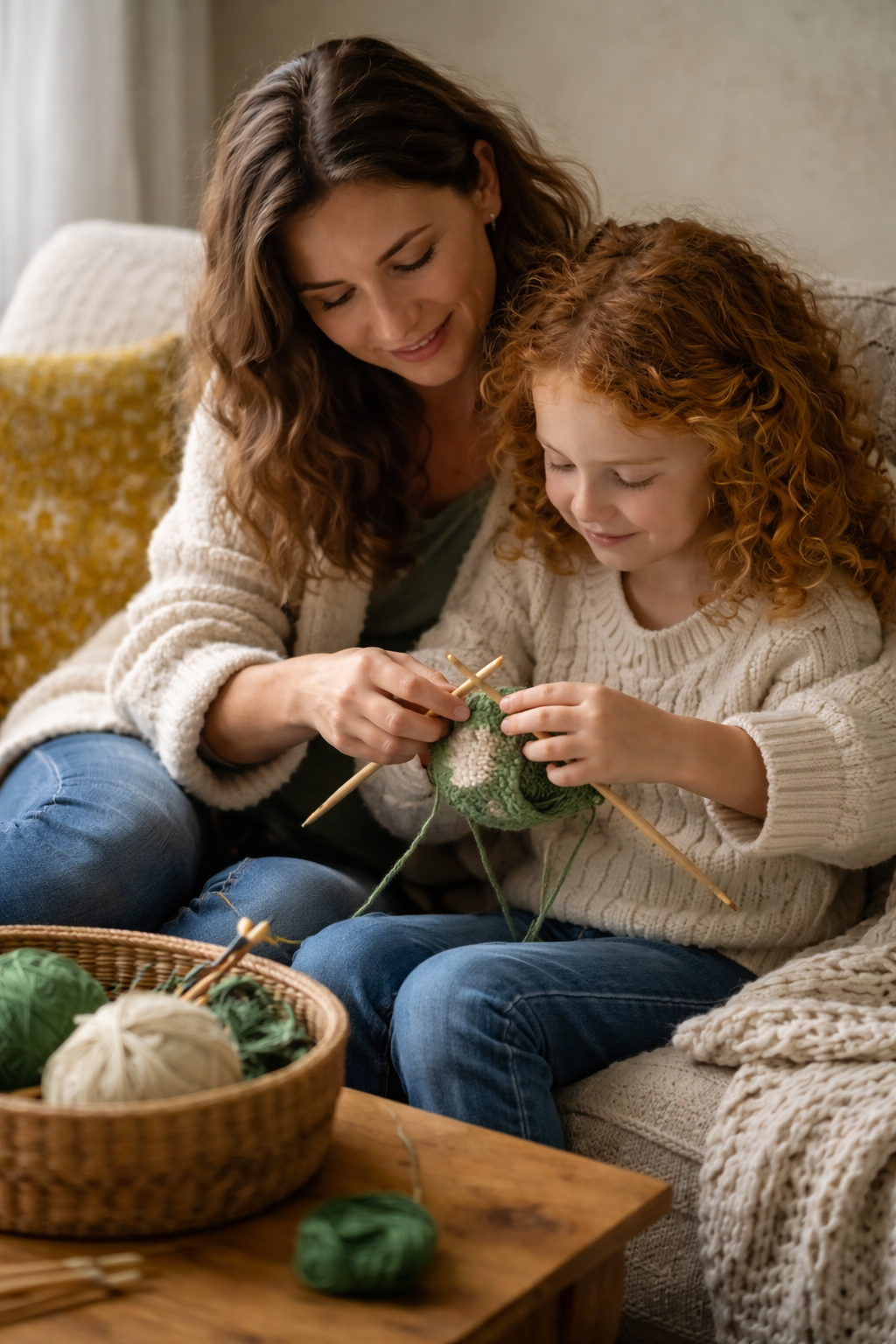
Handicrafts are often the part of Waldorf education that truly captures people’s hearts—and for good reason.
Handicrafts aren’t just “nice activities.” They are a core part of how children learn and develop.
Handicrafts in Waldorf education are practical, hands on activities where children learn to make things using simple tools and natural materials. These can include knitting, sewing, weaving, crochet, finger knitting, and working with wool through felting. As children grow, this can also extend into simple woodwork, such as whittling; carefully shaping and carving wood using a small knife.
When a child learns to knit, sew, or weave, so much is happening beneath the surface. They are strengthening fine motor skills, building concentration, and learning to follow a sequence. But more than that, they are learning patience in a real, tangible way.
They see that things take time, they learn that mistakes can be undone and tried again.
They experience the quiet satisfaction of creating something real—something they can hold, use, or give as a gift.
In a world where so much is instant and digital, handicrafts bring children back to something slower and more grounded. They encourage focus in a way that screens simply can’t.
And from a home education perspective, they offer something really special—connection.
Sitting together, working with your hands, talking as you go… it creates a different kind of learning space. One that feels calm, present, and deeply human.
You don’t need to be an expert to begin (I honestly have zero and I mean zero handicraft skills) however learning alongside your child often makes it even more meaningful.
Storytelling in Waldorf Education
Storytelling sits right at the heart of Waldorf education.
Instead of relying heavily on textbooks, lessons are often introduced through stories. You might read aloud or tell them in your own words.
History becomes stories of people and places. Science becomes stories of discovery and wonder.
Children don’t just hear the information they connect with it. When a child connects emotionally, learning becomes something they want to engage with.
Nature in Waldorf Home Education
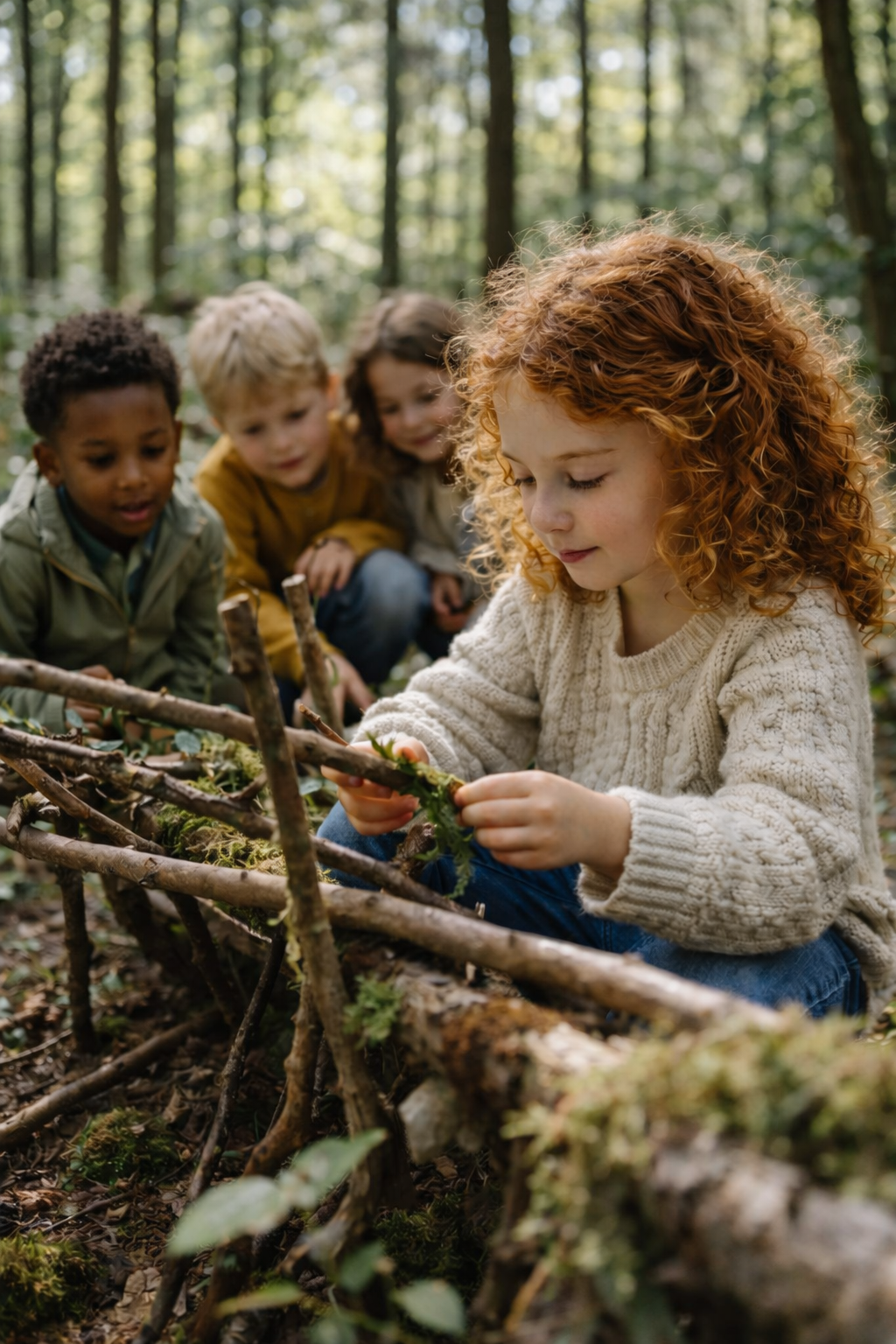
Nature plays a central role in Waldorf education, especially in a home setting.
It doesn’t need to be structured or complicated. It can be as simple as stepping outside each day, noticing the seasons, collecting leaves, or letting your children play freely.
There’s something incredibly grounding about this rhythm of returning to nature again and again.
For many home educators, especially those already drawn to nature based learning, this part of Waldorf fits in beautifully.
A Slower Approach to Academics in Waldorf Education
One of the biggest differences with Waldorf education is the slower introduction of formal academics.
Reading and writing are not rushed in the early years. Instead, the focus is on play, movement, imagination, and real-life experiences.
This can feel uncomfortable at first—especially if you’re used to more traditional expectations. When my eldest was at school and I would attended the Waldorf playgroup with my third child I remember a little girl probably about 7 coming up to me sitting next to me and looking at a book. I asked her something about it and she said “I haven’t learnt to read yet” there was no embarrassment or concern in her voice, actually she said it very confidently. I remember it because at the time my eldest was in year 1, a bit younger than this little girl and struggling with reading. His class were going through the Biff and Chip books like their lives depended on it. All the children knew who was reading what level as the books were in different areas of the classroom. My son was anxious about being on the lower levels, he would tell me to hide his reading books or not get them out his book bag if we had friends over after school. He carried a lot of shame around it. And here was this girl – older than my son, not able to read at all and completely ok with that. The “yet” in her sentence has honestly shaped how I educate my children. To this day when they have moments of comparison I always say it’s ok you just haven’t learnt it YET.
Waldorf education trusts that when children are ready, learning will come more naturally and with far less resistance. It’s about building strong foundations first, rather than pushing too early.
Is Waldorf Education Expensive? (And How to Keep Costs Low)
This is something I think really needs saying, because if you’ve spent any time on Instagram, it can very quickly make Waldorf education feel… expensive.
Beautiful wooden toys, perfectly curated shelves, baskets filled with silks, handmade resources—it’s all lovely, but it can also give the impression that you need all of that to do Waldorf at home.
You really don’t.
At its heart, Waldorf education isn’t about what you buy, it’s about how you approach learning. In fact, some of the most meaningful parts of a Waldorf inspired home education are the simplest.
A Main Lesson Book? That can just be a good quality blank notebook.
Art materials don’t need to be a full set of expensive supplies. You can start with a small set of paints, some decent pencils, and build slowly over time.
Handicrafts can begin with something as simple as yarn and a pair of needles, or even finger knitting with wool you already have at home.
Nature, which is such a big part of Waldorf education, is completely free. Walks, collecting seasonal treasures, observing changes in the world around you—these are some of the richest learning experiences you can offer, and they don’t cost anything at all.
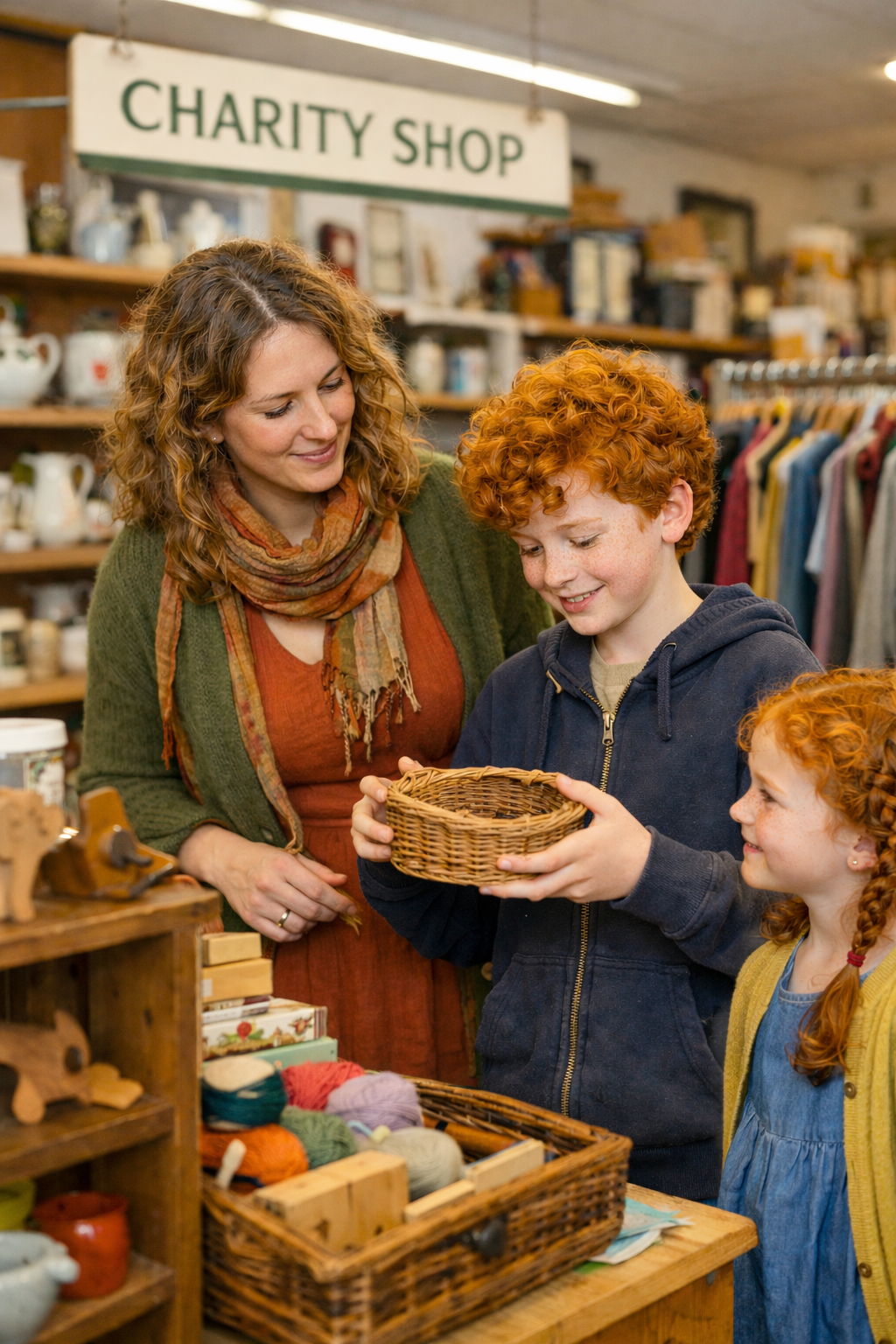
Even toys and resources don’t need to be bought new. Charity shops, second-hand marketplaces, and even making your own can all fit beautifully within this approach.
I think what’s easy to forget, especially when we’re scrolling, is that Waldorf was never meant to be about creating a picture perfect home. It’s about creating a feeling—a calm, connected, intentional way of learning and living.
And that doesn’t come from spending more. If anything, it often comes from simplifying.
If you don’t already follow her have a look at Large family Mama on YouTube. She follows a Waldorf approach with her 9 children and has many videos helping parents to keep the costs down and to make their own materials like block crayons and play silks rather than spending a small fortune on them Large family Mama Waldorf DIY playlist
If you are able to buy some materials I’ll leave a short list of things to help you get started at the end of this blog – but remember whilst they are helpful they are not necessarily- especially when first getting started.
How to Start Waldorf Education at Home
If you’re new to Waldorf education, it’s easy to feel like you need to change everything at once—but you really don’t.
You can begin simply.
Start with your mornings, Add a gentle rhythm, read a story before lessons begin.
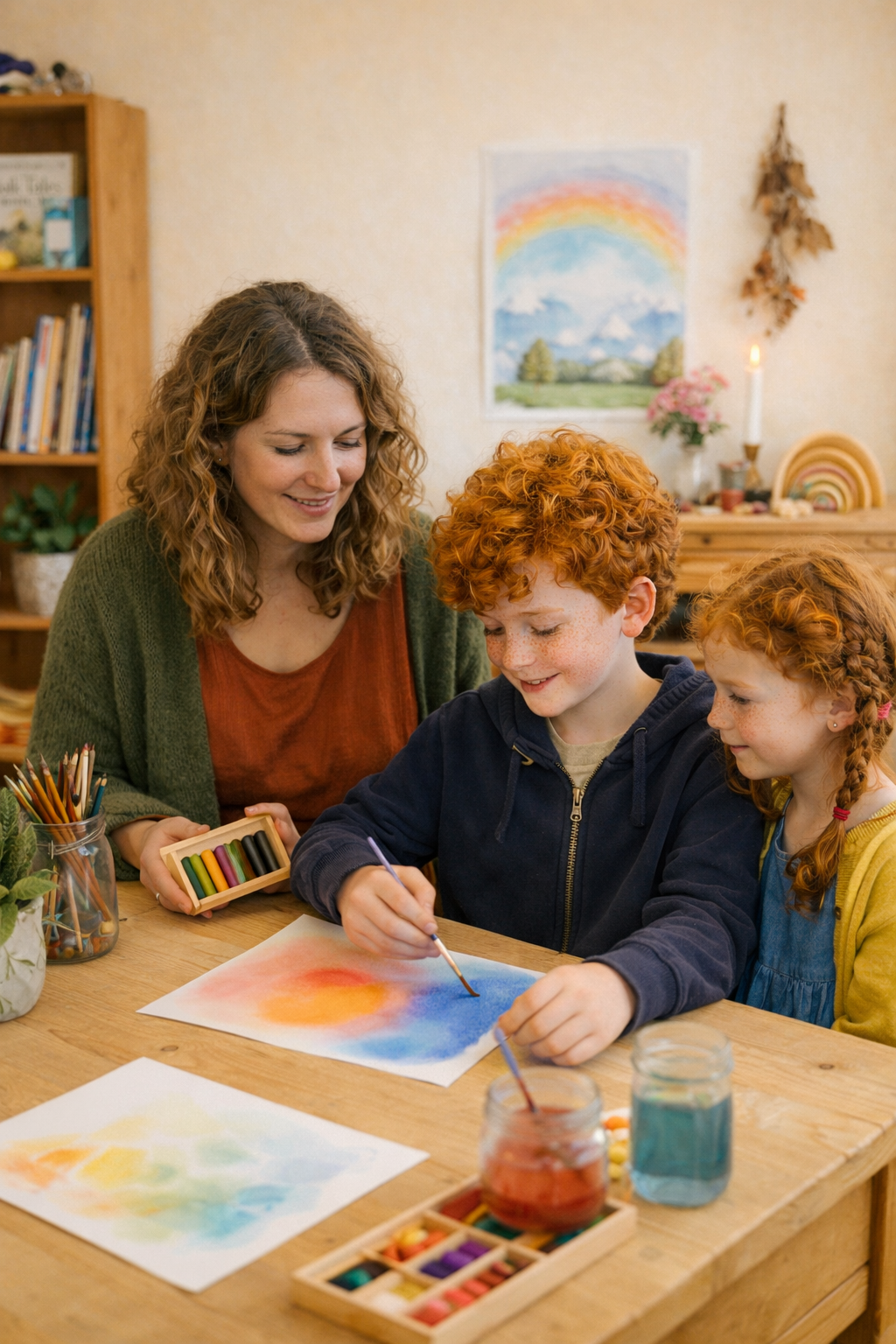
Swap worksheets for a blank book and create your own Main Lesson Book together.
Spend more time outside. Introduce a simple handicraft.
Waldorf home education isn’t about perfection—it’s about intention. Small changes often make the biggest difference.
Why Waldorf Education Resonates with Home Educators
I think what draws so many of us to Waldorf education isn’t just the method—it’s the feeling behind it.
A desire to slow down. To protect childhood. To create a home where learning feels calm, connected, and meaningful.
It’s not about doing more. In many ways, it’s about doing less—but doing it more deeply.
And the reassuring thing is, you can build this kind of home education environment slowly, in a way that fits your family.
The Pros and Cons of Waldorf Education at Home
Like any approach to education, Waldorf won’t be the perfect fit for every family—and I think it’s helpful to hold both the beauty and the challenges gently side by side.
There is so much to love. The slower pace can feel like a relief, especially if you’ve ever felt overwhelmed by trying to do everything. The focus on rhythm, creativity, and connection often brings a sense of calm back into your days. Learning feels less like pressure and more like something shared. And for many children, especially those who struggle with more formal methods, this approach can feel far more natural and engaging.
But there are also things to consider.
The slower introduction to academics can feel uncomfortable at times, particularly if you’re used to seeing clear, measurable progress. It can require a level of trust—and sometimes unlearning—that doesn’t always come easily. Some parents may also find the storytelling approach or lack of structured materials a little daunting, especially in the beginning.
There can also be a quiet pressure (often from what we see online) to “do Waldorf beautifully,” which can make it feel more complicated or expensive than it really needs to be.
In reality, like most things in home education, it’s about finding what works for your family. You might embrace some parts fully, gently adapt others, and leave the rest. And that’s more than enough.
Common Questions About Waldorf Education
Is Waldorf education suitable for home education?
Yes, Waldorf education works beautifully in a home education setting. In fact, many families find it easier to implement at home because it naturally fits into daily life, rhythm, and family connection.
Do I need to follow Waldorf education exactly?
Not at all. Many home educators take inspiration from Waldorf education rather than following it strictly. You can gently adapt the ideas to suit your children and your home.
What age is Waldorf education for?
Waldorf education can be adapted for all ages, from early years through to teenagers. The approach changes as the child grows, but the core principles remain the same.
Do I need special resources for Waldorf homeschooling?
No—you can start very simply with a blank notebook, some art materials, and a few good books. Waldorf education is much more about how you teach than what you buy.
Waldorf resources
If you are able to splash out on some materials that are used widely within the Waldorf community I recommend the following:
A Waldorf Education: Final Thoughts
What I think many of us are really searching for when we come across Waldorf education is not just a different way of teaching, but a different way of being at home with our children. A way that feels more present, more grounded, and more aligned with the kind of childhood we want to offer. And while no approach will ever be perfect, Waldorf gives us something to lean into—a reminder that learning can be thoughtful, unhurried, and deeply human.
I’m going to be turning this into a series where I explore different educational approaches and philosophies, so if there’s one in particular you’d love to learn more about, do let me know in the comments. Next, I’ll be exploring the Charlotte Mason approach, so if that’s something that interests you, be sure to check back or subscribe so you don’t miss it.

 English